
In short
Inflatable or Plush? Choosing Between the Two Kinds of Mascot Costume
These are not two styles of the same product. They are two different machines: one is a fitted foam-and-fur sculpture worn on the body, the other is an air-filled shell held up by a fan. They fail differently, cost differently, ship differently, and suit different jobs — and we build both, so this comparison has no favourite to protect.
In short
- Plush wins on close-range detail and brand fidelity. If people will stand next to the character for photographs, that is usually the deciding factor.
- Inflatable wins on scale, weight and performer tolerance: a 2.6 m character that weighs 4 to 6 kg and fits performers across a 30 cm height range.
- Neither is automatically cooler. A plush suit traps heat in foam; an inflatable moves air constantly but seals the performer inside a coated shell and depends on the blower never stopping.
- The blower is the whole risk profile of an inflatable: no power, no character. Plan for spare batteries the same way you plan for a spare performer.
Two different machines
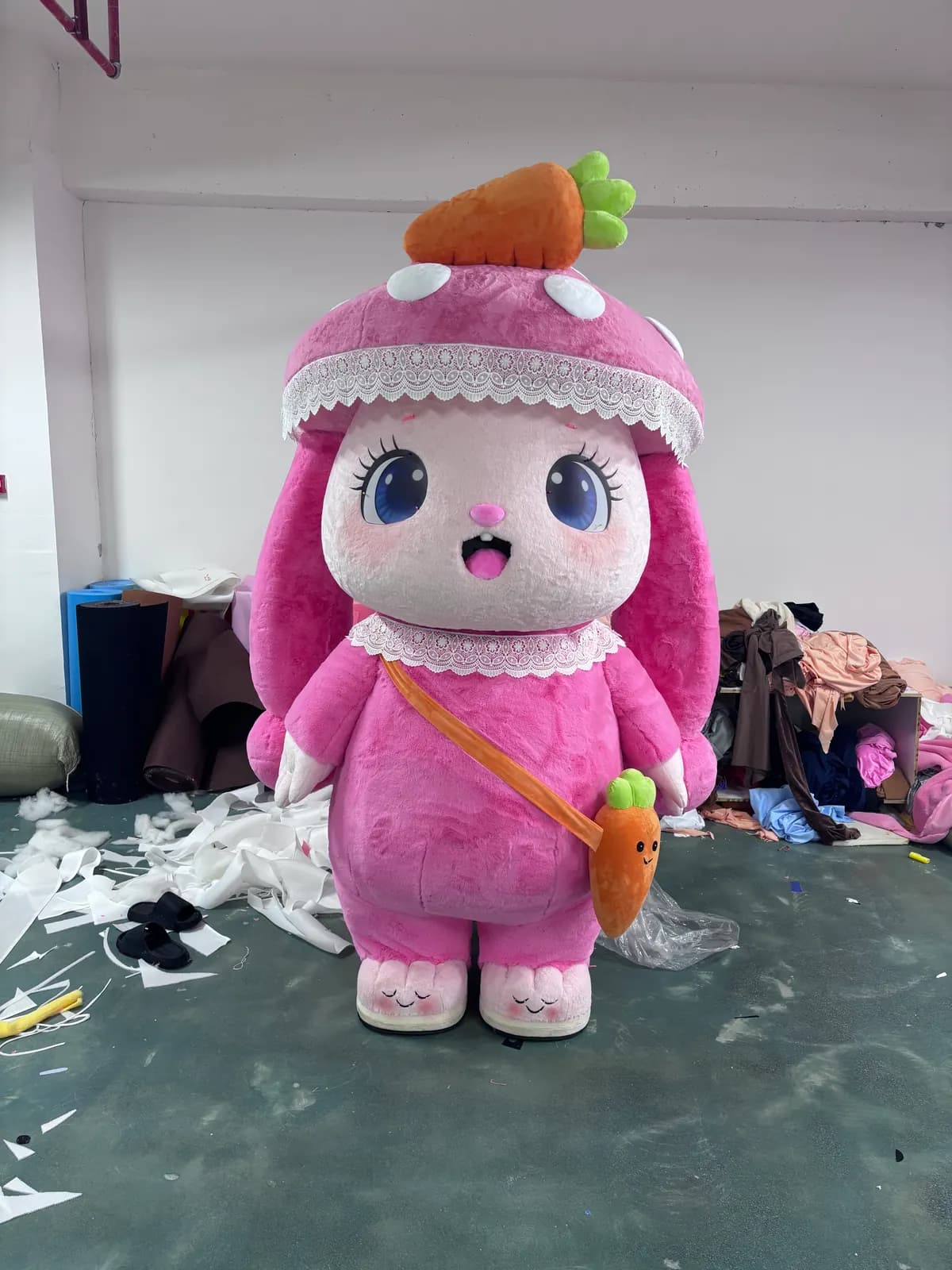
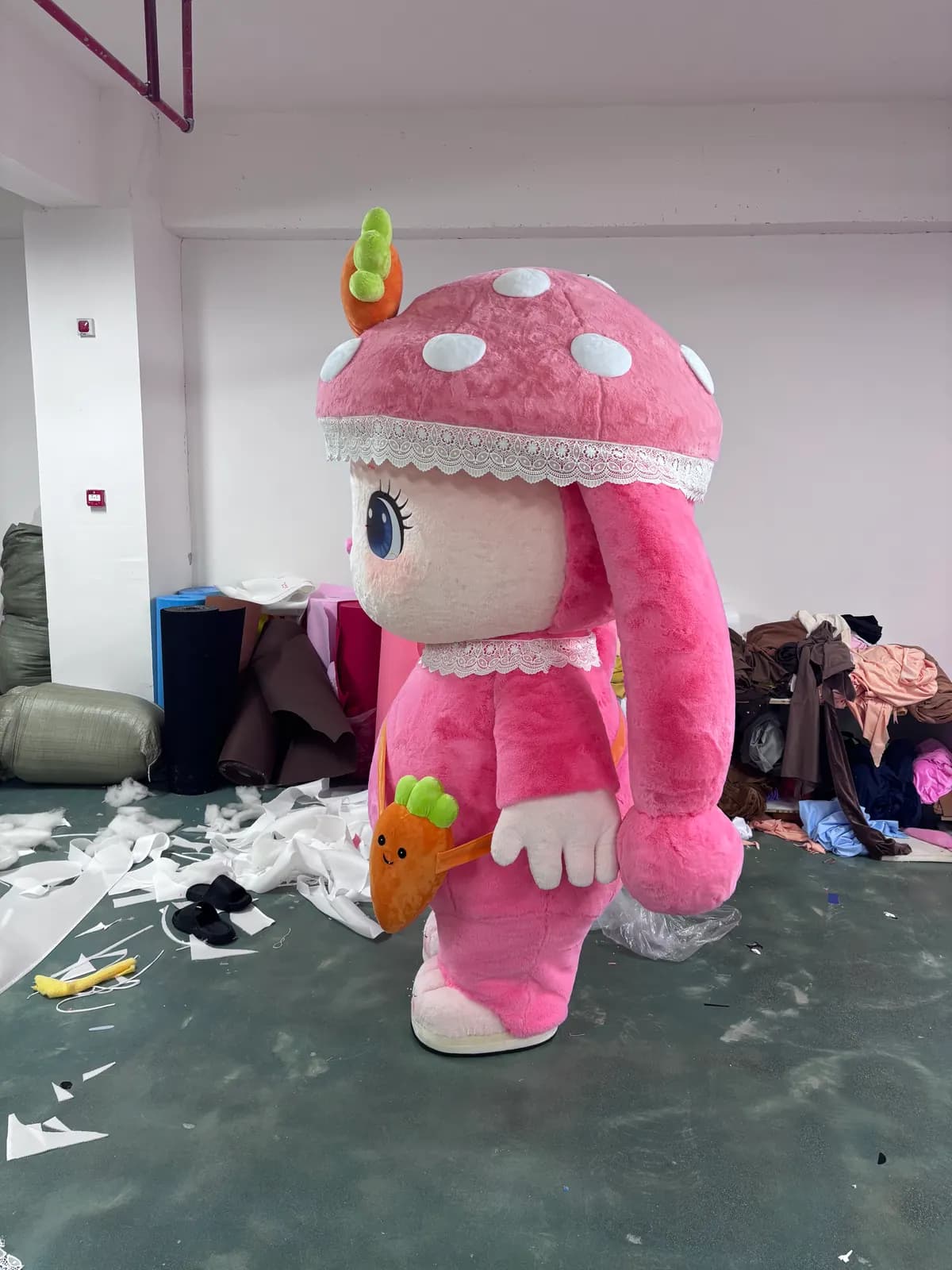
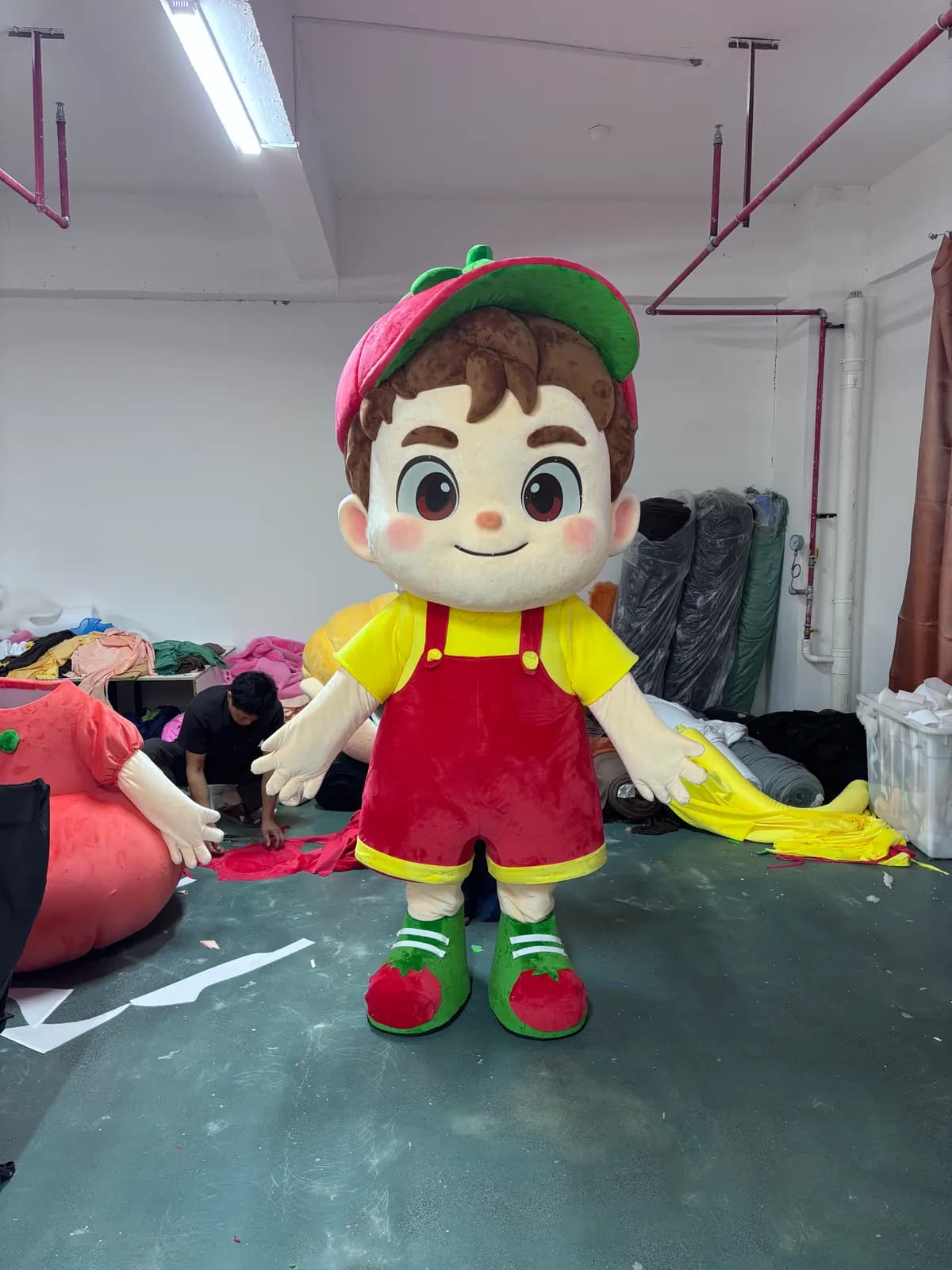
A plush mascot is a carved foam head over an internal cage, plus a patterned body suit of fur or knit over shaped foam. It is fitted to a performer and holds its shape by construction. Everything you see is sewn, glued or sculpted in place.
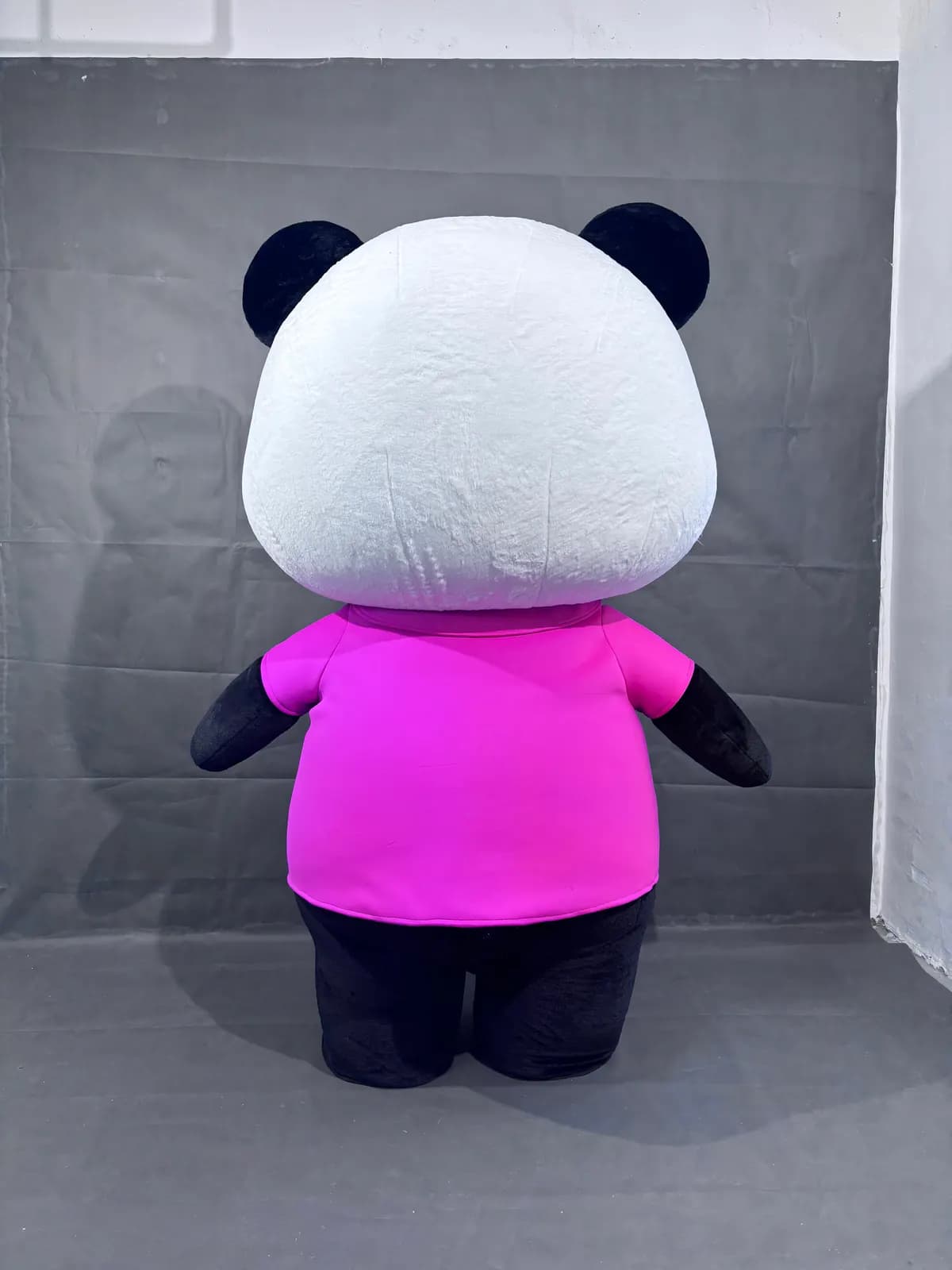
An inflatable mascot is a sealed shell of coated nylon or polyester with a continuously running electric blower. The shape exists only while the fan runs. The performer stands inside a space rather than wearing a garment, which is why an inflatable body will accept performers across a much wider size range than a plush one.
That difference in principle is the origin of every trade-off below. It is also why comparing them on price alone is close to meaningless: you are asking whether a sculpture or a balloon is a better fit for what you are about to do with it.
The comparison, attribute by attribute
- Close-range detail
Inflatable 2/5, Plush / foam 5/5. Printed shell vs sculpted face, layered fur and separate garments
- Visual scale
Inflatable 5/5, Plush / foam 3/5. Inflatables reach 2.2 – 3 m; a plush body over 2 m gets heavy fast
- Weight on the performer
Inflatable 5/5, Plush / foam 3/5. 4 – 6 kg against 7 – 9 kg, and the inflatable carries none of it on the neck
- Fits different performers
Inflatable 5/5, Plush / foam 3/5. 30 cm height spread against roughly 12 cm for a fitted suit
- Heat tolerance
Inflatable 4/5, Plush / foam 3/5. Constant airflow, but a sealed coated shell. Neither is comfortable at 30 °C
- Durability against snags
Inflatable 2/5, Plush / foam 4/5. A puncture stops the show; a pulled seam on plush does not
- Field repairability
Inflatable 4/5, Plush / foam 2/5. Patch kit in minutes vs a workshop job for a torn sculpt
- Packing and shipping
Inflatable 5/5, Plush / foam 2/5. Folds into a case; a plush head ships as a rigid box that cannot be crushed
- Brand fidelity to artwork
Inflatable 3/5, Plush / foam 5/5. Print matches colour well; three-dimensional character is where plush wins
- Silent operation
Inflatable 1/5, Plush / foam 5/5. A blower runs the whole time and is audible up close
Heat and comfort: neither one is a free pass
Inflatables are often sold as the cool option. It is half true. Air moves through the shell constantly, which helps, and the performer is not wrapped in foam. But the shell is a coated, effectively non-breathable fabric, and the air being pumped in is whatever the venue has — at an outdoor event in August, the blower is delivering hot air at volume.
Plush suits do the opposite: no airflow unless fans are fitted, but a much thinner barrier at the extremities and no dependence on a motor. With twin head fans, a crown vent and a disciplined rotation, a plush costume is entirely workable in the conditions most events actually happen in.
The rotation rules do not change between the two constructions. Our guide to performer heat safety sets out the research and a work-rest table; apply it to both, and shorten the stint for whichever one your performer finds harder that day.
| Factor | Inflatable | Plush / foam |
|---|---|---|
| Airflow | Continuous, blower-driven | Fan-assisted in the head only |
| Noise at the performer's ear | Constant blower hum | Quiet; small fan noise |
| Weight distribution | Harness and waist, nothing on the neck | Shoulders and hips through the harness |
| Peripheral vision | Narrow — the shell surrounds the performer | Character-dependent; mesh can be generous |
| Being hugged by a crowd | Shell deforms, then recovers | Absorbs it; the sculpt does not move |
| Wind outdoors | A real limitation — acts as a sail above about 25 km/h | Unaffected |
Durability, failure and repair
The two constructions fail in opposite ways, and knowing which failure you can live with usually settles the choice.
Inflatable
- A puncture or a failed blower ends the appearance immediately
- Seams and the fan sleeve are the usual leak points, not the panels
- Field repair is genuinely easy: a patch kit and ten minutes
- Battery life sets the appearance length — carry two, always
Plush / foam
- Degrades gradually: matted fur, worn glove palms, tired soles
- Nothing stops the performance mid-appearance
- Repairs need a workshop, but the sculpt lasts through several re-furs
- Heat, damp storage and a crushed head are what actually kill it
Pre-season
Half a day
Inflatable: seam and blower check, spare batteries charged. Plush: harness, fans, fur brush-out
Both: run a full walk test
Each appearance
10 min
Inflatable: inflate, leak-listen, pack dry. Plush: dry, air, wipe the head
Mid-season
1 day
Inflatable: patch the small leaks you have been ignoring. Plush: re-glue lifting foam, replace gloves
End of season
2 – 5 days
Inflatable: clean shell, store loosely folded, blower serviced. Plush: professional clean, re-fur worn patches
Photograph the condition of both
What each one costs to own
Purchase price is only part of it. Shipping volume, spares and the cost of a failed appearance all belong in the comparison, especially for a touring programme.
| Line | Inflatable | Plush / foam |
|---|---|---|
| Typical ex-works price | USD 400 – 1,200 | USD 600 – 3,000 |
| Weight shipped | 5 – 8 kg | 9 – 14 kg |
| Carton volume | ≈ 0.08 m³ — folds flat | ≈ 0.25 m³ — the head cannot be compressed |
| Air freight, typical | Low, and folds into checked baggage | High; the head sets the volumetric weight |
| Consumables per season | Batteries, patch kit | Gloves, feet, head socks |
| Refurbishment at 3 years | New shell if printing has faded | Re-fur and re-line; the sculpt is kept |
| Cost of a failed unit mid-event | Total — no air, no character | Usually cosmetic; the show continues |
Full working of what drives these numbers is in our cost breakdown. Batteries for inflatables ship under IATA lithium battery rules — carry them in the cabin, never in the hold.
How to choose in five questions
Q1
Photographs at arm's length?
If the character will be hugged and photographed close up, choose plush. Detail is visible at that distance and printing is not.
Q2
Does it need to be huge?
Above about 2.1 m, an inflatable is the only construction a performer can wear for an hour.
Q3
How many performers?
A roster spanning more than about 12 cm in height points to inflatable, or to a plush build padded down from the tallest.
Q4
How does it travel?
Flying to every appearance favours inflatable. A van and a storage room removes the advantage.
Q5
What happens if it fails mid-event?
If there is no acceptable answer, plush — or an inflatable with a second blower and a charged spare battery on site.
Frequently asked questions
Are inflatable mascot costumes cooler than plush ones?
Somewhat, but not dramatically. The blower moves air constantly, which helps, but the shell is a coated non-breathable fabric and the air being delivered is the venue's own air. At 30 °C outdoors both constructions need a short rotation and supervised breaks.
How long does the blower battery last in an inflatable costume?
Typically three to six hours depending on the pack and the number of fans, which is longer than any sensible performer rotation. The practical rule is two charged batteries on site: the risk is not running out, it is a pack that failed to charge overnight.
Which lasts longer, inflatable or plush?
Plush, in our experience, because it degrades gradually and the sculpt survives several refurbishments. An inflatable shell is fine for years if it is not snagged, but a puncture is a sudden failure and printing fades in sunlight. Inflatables are much easier to repair in the field.
Can an inflatable mascot match our brand colours?
Colour, yes — printed shells match a specified colour well. Three-dimensional character detail is the limit: sculpted brows, layered fur, separate garments and a defined jawline are plush features that printing on an inflated surface cannot reproduce.
Can several people share one inflatable mascot costume?
Yes, and this is one of their genuine advantages. Because the shell is not fitted to the body, one inflatable typically serves performers across about a 30 cm height range, against roughly 12 cm for a fitted plush suit.
Is an inflatable mascot costume cheaper?
Usually, and it also ships cheaper because it folds flat. Expect roughly USD 400 to 1,200 ex-works against USD 600 to 3,000 for a custom plush build, with the gap widening as character complexity rises.
Can inflatable mascot costumes be used outdoors?
Yes, with one caveat: wind. An inflated body is a sail, and above roughly 25 km/h the performer is fighting it. Light rain is survivable if the blower intake stays dry, but the electronics are the limiting factor, not the shell.
About the author
- Building mascot costumes in Shenzhen since 2013
- About 3,000 costumes a month, shipped to 60+ countries
- Writes from the cutting table, the sewing line and the pre-shipment QC bench
Sources
External links open in a new tab and are provided for verification, not endorsement.